Microsoft Dynamics 365 Implementation Services
Stratify IT implements Microsoft Dynamics 365 for organizations that need their ERP, CRM, and business operations platforms to work together without a lengthy, over-budget deployment.
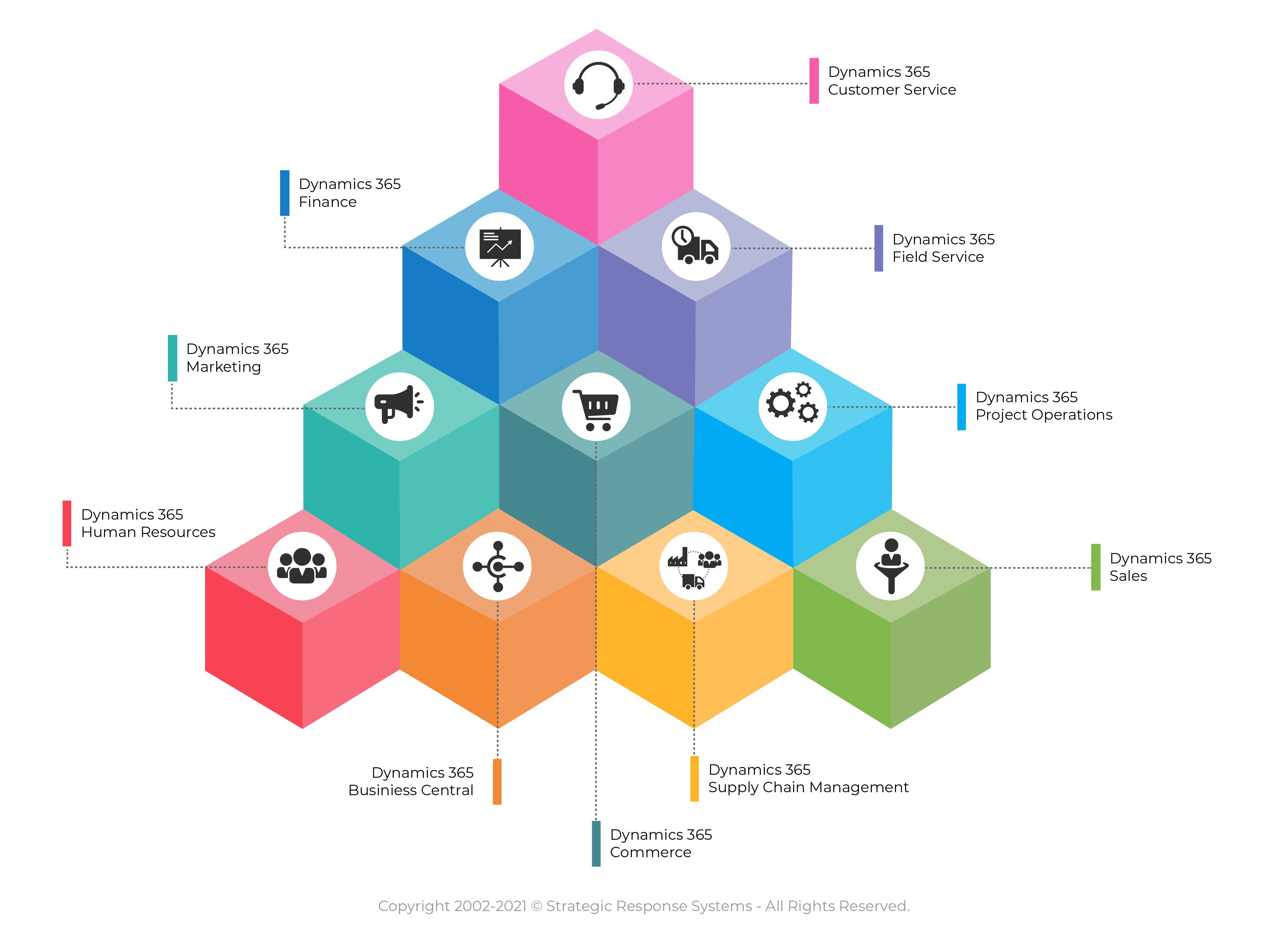
Dynamics 365 covers sales, customer service, field service, finance, supply chain, and HR. Most organizations don't need all of it. Implementations that struggle are usually the ones that deployed too much at once without a clear operational rationale. Our expert Microsoft Dynamics 365 implementation services start by understanding how your business actually runs, then we recommend which modules to deploy and in what order.
What Our Dynamics 365 Implementations Cover
Every Dynamics 365 engagement at Stratify IT follows the same structure: define scope before configuration begins, build to your actual workflows rather than the default setup, validate data migration at each stage, and document everything for your team at handoff.
For organizations running other Microsoft products (365, Azure, Teams) or third-party platforms, we configure the integrations required to keep data current across systems. Strategic Microsoft Dynamics 365 implementation reduces manual handoffs, eliminates duplicate data entry, and gives your team accurate information in the systems they already use.
The practical payoff is less manual data entry, fewer handoffs between systems, and accurate information in the tools your team already uses.
The capabilities of Microsoft Dynamics 365 demonstrate how thoughtful technology implementation can transform your entire business environment:
Workflow Integration
Dynamics 365 simplifies operations by connecting disparate departments, creating a unified system where data and tasks flow effortlessly. This integration eliminates silos and ensures that everyone works with the same accurate, up-to-date information.
Task Automation
From automated invoicing to customer interactions, Dynamics 365 reduces manual intervention across your entire operation. This automation saves time and improves reliability, allowing your team to focus on building relationships and driving growth.
Real-Time Business Intelligence
Give decision-makers instant access to the data and insights they need. Dynamics 365 transforms raw information into strategic intelligence, driving informed decisions and enabling quicker responses to market opportunities and challenges.
Cloud-Powered Scalability
Dynamics 365 offers businesses the flexibility and scalability of a cloud-based solution, supporting growth without requiring significant infrastructure investment. Scale up or down as needed while maintaining consistent performance and security.
We specialize in implementing Microsoft Dynamics solutions scoped to your specific business needs. As highlighted in our analysis of selecting the right technology platform, choosing Microsoft Dynamics 365 as your business applications framework delivers real impact for organizations ready to embrace strategic automation.
Many companies find that they more than recoup their implementation and customization costs in the first year through increased employee productivity and accelerated company growth. This return on investment comes from freeing employees to apply the skills you hired them for, rather than spending time on repetitive administrative tasks.
How Can Businesses Ensure a Successful CRM Implementation?
Successfully implementing a CRM system requires thoughtful planning and active involvement from your team. Here are some strategies to ensure a smooth rollout:
Engage Key Stakeholders Early
Involve the individuals using the CRM from the beginning. Their input will help tailor the system to meet the company's strategic goals and specific needs.
Set Clear Expectations
Communicate what changes the CRM will bring. This transparency helps prevent misunderstandings and gets everyone on the same page.
Gather User Requirements
Solicit feedback from future users to understand their needs and preferences. This can guide the customization of the CRM to serve your team better.
Address Concerns Proactively
Listen to your team's reservations or fears. Addressing these concerns early makes for a smoother transition.
By following these steps, businesses can align their CRM with organizational objectives, gain valuable insights from users, and create a cohesive implementation plan.
What Differentiates Stratify IT as a Microsoft Partner?
We stand out because we are a self-funded business. This means we aren't driven by investors demanding higher profits. Instead, our primary focus is on you, our customer. Your success directly translates to our success.
Stress-Free Implementation
We specialize in removing the stress from your CRM implementation projects. We provide continuous support so you get the most out of your CRM software.
Genuine Care and Integrity
Our approach is rooted in genuine care and integrity. We'll never push products or services you don't need. On the contrary, we actively seek opportunities to help you save money.
Customer-Focused Partnership
Partnering with Stratify IT means working with a team that prioritizes your needs and long-term success. We pride ourselves on being reliable partners every step of the way.
Reducing Administrative Overhead with Microsoft Dynamics
A significant portion of time in most organizations goes to work that doesn't require human judgment: data entry, status updates, routing approvals, and reconciling information across disconnected systems. Microsoft Dynamics automates those workflows and gives your team accurate information in the systems they already use.
The practical result is that staff spend less time on coordination overhead and more time on the work they were hired to do.
Explore further in our document how Microsoft Dynamics and other Microsoft solutions can be configured to help your team manage their day more efficiently and build a place where innovation happens.
Don't Go At It Alone
There is a reason that Microsoft makes Dynamics applications available through a network of partners like Stratify IT; it is important to work with a company that can provide the specialized customization services you need to get the most out of your Dynamics investment. Think of Dynamics 365 as the "framework" with Stratify IT providing the strategy and skill to successfully implement the precise set of workflows matched to your specific needs.
With Stratify IT as your partner, you will have a clear picture of the project scope, functionalities, priorities and anticipated outcomes before work begins. To know if Microsoft Dynamics is the right solution for your business, please get in touch with us for a useful discussion.
Related Services
Organizations evaluating Dynamics 365 often engage a Virtual CIO to assess whether the platform aligns with their technology roadmap before committing to an implementation. Every Dynamics project begins with an IT assessment that maps your current environment, existing integrations, and data migration requirements before any configuration begins. For organizations that need custom application development alongside Dynamics, connecting it to proprietary workflows or building complementary tools, our application services team handles both.
Ready to Transform Your Business Operations?
Discover how Microsoft Dynamics 365 can streamline your workflows and strengthen your team
Common Questions About Microsoft Dynamics 365
Salesforce is a best-in-class CRM focused primarily on sales and customer management. Dynamics 365 is a broader platform that combines CRM and ERP capabilities, covering sales, customer service, finance, operations, and supply chain in a unified data model. For businesses already running Microsoft 365 and Azure, the integration advantage is significant: Dynamics connects natively to Outlook, Teams, SharePoint, and Power BI without middleware. Organizations that need tight CRM-to-finance integration, identified during an IT assessment, often find Dynamics more practical or want to avoid managing separate platforms for front-office and back-office processes often find Dynamics 365 more practical than a Salesforce-plus-ERP combination.
A focused sales module implementation for a 20-50 user organization typically takes 8-16 weeks. Customer service, finance, or operations modules add complexity and extend timelines. Full ERP deployments covering finance, supply chain, and operations for mid-size enterprises typically run 6-12 months. Timeline drivers include data migration complexity, the number of custom integrations required, the state of existing business process documentation, and how much configuration versus customization is involved. Implementations that attempt to customize heavily before users have lived with the standard product almost always run over time and budget.
No. The platform is modular, organizations can implement specific apps (Sales, Customer Service, Finance, Field Service) independently and expand over time. A common starting point is replacing a legacy CRM with Dynamics 365 Sales while leaving existing accounting software in place, then connecting the two via integration, and eventually migrating finance to Dynamics 365 Finance as a second phase. This phased approach reduces deployment risk and gives users time to build familiarity with the platform before the scope expands.
Data quality problems that have accumulated in legacy systems become highly visible during migration. Duplicate records, inconsistent field formats, missing required values, and relationships between records that weren't formally maintained all require remediation before data can be imported into Dynamics. Migration scope and data quality assessment should be included explicitly in the project plan, organizations that treat data migration as a straightforward step typically discover mid-project that it's the most time-consuming one.
Dynamics 365 Copilot integrates Microsoft's generative AI capabilities directly into business workflows. In Sales, it can summarize email threads, generate meeting follow-up drafts, and surface next-action recommendations from CRM data. In Customer Service, it suggests responses from knowledge base articles and summarizes case history for agents. In Finance, it assists with anomaly detection and cash flow forecasting. Copilot functionality is available in Microsoft 365 Government as well as commercial tenants, though feature parity between commercial and GCC environments varies and should be confirmed before licensing decisions are made.
Insufficient executive sponsorship tops the list, implementations that lack a senior business owner who can make decisions, resolve departmental conflicts, and enforce adoption frequently stall. Underinvestment in user training is a close second; a well-configured system that users don't understand produces the same result as a poorly configured one. Over-customization in Phase 1 is the third pattern: modifying the system extensively to match existing processes rather than adapting processes to the platform's intended workflows. Customizations add cost, slow deployment, and create technical debt that compounds with each platform update.
Microsoft sells Dynamics 365 licenses directly and through a network of certified resellers and implementation partners. For organizations beyond basic out-of-the-box deployments, working with an experienced implementation partner reduces risk significantly. Partners with application services depth can also build custom integrations alongside the Dynamics deployment. Partners provide configuration expertise, change management support, data migration capability, and ongoing post-go-live support that Microsoft's direct channel doesn't provide. Partner pricing for licenses is typically equivalent to or competitive with direct Microsoft pricing, and the implementation services cost is offset by faster time-to-value and fewer costly project mistakes.
Dynamics 365 Finance and Supply Chain Management include native multi-currency, multi-entity, and multi-legal-entity capabilities. Organizations can manage separate legal entities with independent charts of accounts, currencies, and tax configurations while consolidating reporting across all entities in a single environment. Intercompany transactions, eliminations, and currency revaluation are handled within the platform. For companies operating across multiple countries, Dynamics also supports localized regulatory requirements, VAT, GST, country-specific tax formats, and local statutory reporting, through Microsoft-maintained localization packages.
Dynamics 365 licensing is subscription-based, typically $50-$210 per user per month depending on the module and whether users need full or limited access. Microsoft updates the platform automatically with two major release waves per year (April and October), which can affect custom functionality and require testing before each update cycle. Ongoing support costs, for configuration changes, user questions, and update validation, are often underestimated in initial budgets. Organizations that treat go-live as the end of the investment rather than the start of an operational cost typically find themselves under-resourced for the steady-state management the platform requires.